
Radiotherapy split into microbeams.
CollimateHealth is building a clinical microbeam radiation therapy system for cancer: an array of micrometre-thin beams at high dose, from a machine that fits in a room under 10 m².
- Planned footprint
- < 10 m²
- First patients
- targeted by 2028
Same tumour. A very different dose pattern.
Conventional radiation oncology relies on broad beams at lower dose, and the tissue around a tumour carries much of the side effects.
Microbeam radiation delivers an array of extremely narrow beams at substantially higher dose. Tissue in the valleys between the beams receives a fraction of that dose. Until now, this needed the medical beamline of a synchrotron.
Read the technologyWhat happens inside the tissue
Four steps, from the beam leaving the source to the biological response researchers observe in preclinical work.
A broad beam doses everything
Without collimation the field is uniform. The tumour and the healthy tissue around it in the beam path receive the same dose.
The collimator splits the beam
A collimator with precise slits moves into the beam and cuts it into a comb of parallel microbeams, each only micrometres wide.
Peaks and valleys
Along each beam the dose is very high. Between the beams it drops to a small fraction, so the cells in the valleys are spared and can support tissue repair.
The body joins in
Tumour cells hit by the peaks undergo a highly disruptive cell death that increases antigen presentation and can recruit an immune response. Temporary channels help therapeutics reach the tumour.
From a synchrotron hall to a treatment room
Where microbeam therapy was proven
844 m
around the storage ring of a synchrotron such as the ESRF in Grenoble
- National research facility
- Preclinical research
- Not built to sit inside a hospital
What CollimateHealth is building
< 10 m²
planned footprint of the whole treatment system
- Fits a hospital treatment room
- First clinical prototype funded in 2026
- First patients targeted by the end of 2028
The ESRF ring is shown only for scale. It is not a CollimateHealth partner.
A decade of microbeam research, now a company
Co-founders Prof. Dr. Stefan Bartzsch and Dr. Johanna Winter and the technical team have spent almost ten years developing the core technology with TUM and its university hospital rechts der Isar. In June 2026 CollimateHealth closed an oversubscribed €6 million seed round to build the first clinical prototype.
Meet the team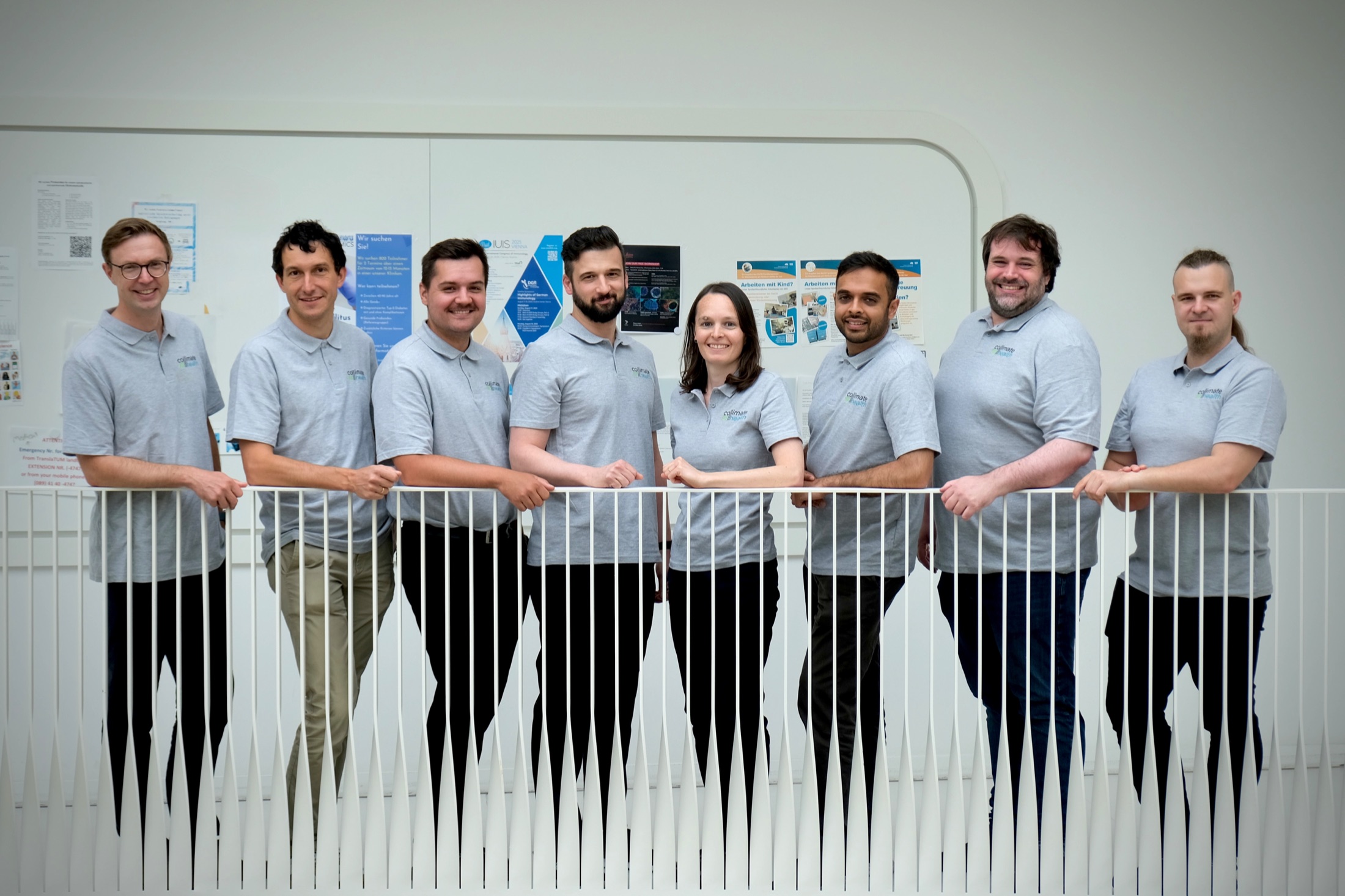
First patients by the end of 2028
The seed round funds the first clinical prototype and the preclinical data for the regulatory path. We are looking for partners for each step.